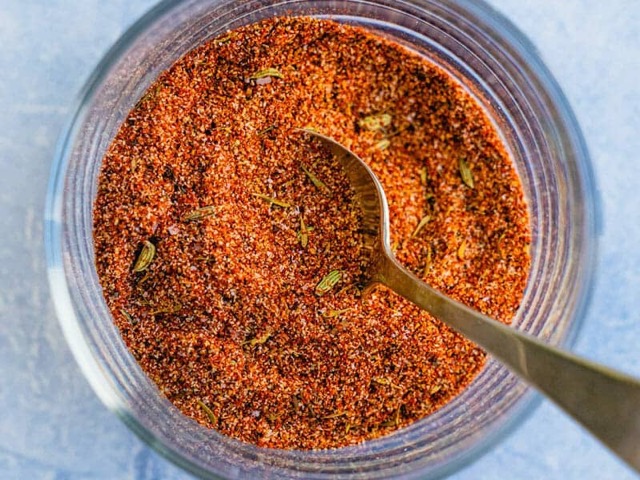
The most popular commercial Cajun seasoning in America — Tony Chachere's Original Creole Seasoning — lists salt as its first ingredient. The original 1972 recipe was literally 26 oz of salt mixed with about 5 oz of spices. That's over 80% salt by weight. A single quarter-teaspoon serving has 340–380mg of sodium. A tablespoon — which is what many recipes call for — delivers around 1,360mg of sodium. That's 56% of your entire daily recommended limit in one spoonful of "seasoning."
This matters because Cajun recipes already contain salt from multiple sources. Think about our Shrimp & Grits: the chicken stock has sodium, the Parmesan has sodium, the bacon has sodium, the andouille sausage has sodium, the Worcestershire has sodium, and there's kosher salt in the grits. If you dump a tablespoon of Tony's on top of all that, you're well past 2,000mg per serving — a full day's limit for many adults.
Our blend has zero sodium. You add salt separately, in amounts you choose, after tasting. That's not just healthier — it produces better-seasoned food, because you're in control.
| Amount | Ingredient | Role |
|---|---|---|
| 2 Tbsp | Smoked paprika | The backbone — smoky depth and deep red color |
| 1 Tbsp | Garlic powder | Savory base, the most prominent flavor after paprika |
| 1 Tbsp | Onion powder | Sweet, rounded savoriness |
| 2 tsp | Dried oregano | Earthy, slightly bitter — the herbal anchor |
| 2 tsp | Dried thyme | Warm, slightly floral — pairs with the oregano |
| 1½ tsp | Black pepper, finely ground | Sharp heat and aromatic bite |
| 1–1½ tsp | Cayenne pepper | The heat — adjust to your tolerance (see notes) |
Measure all spices into a small bowl. If your oregano and thyme are leaf-form (not pre-ground), crush them between your fingertips as you add them to the bowl — this releases the essential oils and helps them blend evenly with the powdered spices.
Whisk thoroughly until the color is uniform — you should see an even reddish-brown with no visible clumps or streaks of individual spices. Alternatively, put everything in a small jar with a tight-fitting lid and shake vigorously for 30 seconds.
Dip a clean, slightly damp fingertip into the blend and taste. You should get: smokiness first (paprika), then savory depth (garlic/onion), then warmth that builds (cayenne/black pepper), with an earthy herbal note underneath (oregano/thyme). If anything feels missing or flat, adjust now. The most common issue is not enough cayenne — people err on the side of caution and end up with a blend that's smoky but doesn't have any bite.
| Container | Notes |
|---|---|
| Small mason jar (4 oz) | Best option. Airtight, easy to scoop from, looks nice on the shelf. |
| Recycled spice jar | Works great. Clean and dry completely before filling. |
| Zip-top bag | Fine for short-term. Squeeze out air before sealing. |
Store in a cool, dark place (not above the stove — heat degrades spices faster than anything). Best flavor within the first 3 months, perfectly usable for 6–12 months. Label it with the date you made it. If it stops smelling potent when you open the jar, it's time to make a fresh batch.
Beyond the sodium story, there are some genuinely positive health properties in this blend. Cayenne pepper contains capsaicin, which has documented anti-inflammatory properties and may support metabolism. Garlic powder retains allicin compounds linked to cardiovascular health. Oregano and thyme are both rich in antioxidants — oregano in particular has one of the highest antioxidant concentrations of any dried herb. Smoked paprika is a good source of vitamin A.
None of this means Cajun seasoning is a health food — you're using teaspoons, not cups. But it's a meaningful difference versus commercial blends where you're getting a tablespoon of salt with a dusting of these beneficial spices on top.
| Scenario | Tony Chachere's | Our Blend | Sodium Saved |
|---|---|---|---|
| Shrimp & Grits (1½ tsp) | 2,280mg added to dish | ~5mg added | 2,275mg |
| Blackened chicken (1 Tbsp) | ~4,560mg added to dish | ~9mg added | 4,551mg |
| Jambalaya (2 Tbsp) | ~9,120mg added to pot | ~18mg added | 9,102mg |
| Weekly use (3 recipes) | 5,000–15,000mg total | 15–30mg total | Massive |
Cajun cuisine comes from the rural French-Acadian immigrants in the bayou and prairie regions of Louisiana. It's rustic, pepper-forward, and built on the "holy trinity" of onion, celery, and bell pepper. Think one-pot dishes like gumbo, boudin, and crawfish boils.
Creole cuisine comes from New Orleans — a city cuisine with French, Spanish, African, and Caribbean influences. It's more refined, more herb-heavy, and often includes tomatoes (which Cajun cooking traditionally does not).
Our blend sits somewhere in between — the smoked paprika and cayenne lean Cajun (pepper-forward), while the oregano and thyme lean Creole (herb-forward). It works beautifully in both traditions. Tony Chachere's, despite the common reference as "Cajun seasoning," is actually labeled "Original Creole Seasoning."
| Variation | Modification | Best For |
|---|---|---|
| Extra Hot | Double the cayenne to 2–3 tsp | Blackened fish, wings, people who mean it |
| Mild / Family | Reduce cayenne to ½ tsp | Kids, spice-sensitive guests |
| Seafood Boil | Add 1 tsp celery seed + ½ tsp ground mustard | Shrimp boils, crab boils, crawfish |
| Blackening | Add 1 tsp regular paprika + ½ tsp white pepper | Blackened fish or chicken (cook in cast iron, very hot) |
| Sweet Heat | Add 1 tsp brown sugar | Grilled meats, roasted sweet potatoes, popcorn |
| Decision | Rationale |
|---|---|
| Smoked paprika as backbone | The consensus ratio across 8+ well-reviewed salt-free blends is 2 parts paprika to 1 part garlic to 1 part onion. We use smoked instead of sweet for more depth — critical in a salt-free blend where there's no sodium to amplify flavors. |
| 2:1 garlic-to-onion ratio | Multiple sources use equal parts, but garlic powder is sharper and more aromatic. A slight garlic lean gives the blend more punch, especially on proteins. |
| Equal oregano and thyme | Traditional Cajun blends lean heavier on thyme. Creole blends add oregano. We split the difference for maximum versatility. One actual Cajun reviewer noted they prefer it without the herbs — that's the pure Cajun approach, and it's valid. |
| Cayenne as a range (1–1½ tsp) | Heat tolerance is the most personal variable in any spice blend. Giving a range respects that while still steering people toward a minimum that actually contributes flavor. |
| No white pepper (in base) | White pepper is traditional in Cajun blends but has a sharp, musty flavor some people dislike. We list it as a variation rather than a default. |
| No salt, period | The entire point. Every recipe on this site has a sodium audit. This seasoning exists so our readers can use Cajun flavor generously without unknowingly blowing past their daily sodium limit. |