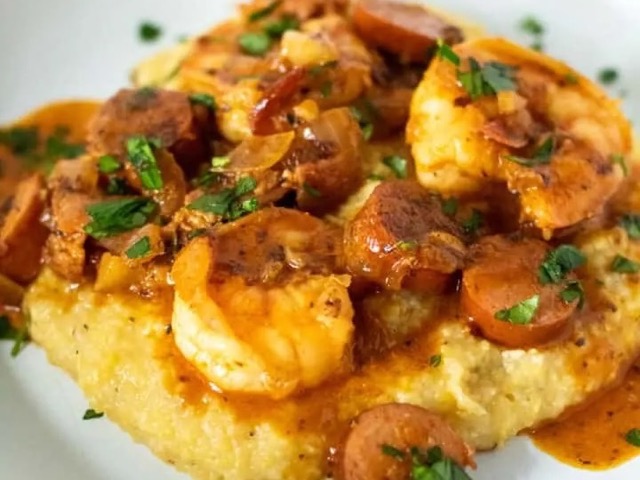
Shrimp and grits with andouille sausage and pan sauce
A Perfect-Every-Time Guide

Ultimate Shrimp & Grits

Creamy Parmesan grits with Cajun shrimp, andouille sausage & bacon in a white wine–shrimp stock pan sauce
45 Minutes
4 Servings
4 Phases
Low Country Cuisine
Before You Begin
Read this section completely before touching a pan. The beauty of this dish is that it's fast — but only if you're organized.

This recipe runs three things in parallel: shrimp stock simmers on a back burner, grits cook on the front burner, and then the shrimp-and-sausage pan comes together quickly at the end. If your ingredients aren't prepped before you start cooking, you'll fall behind and either overcook the shrimp or let the grits go cold. Mise en place is not optional here.

Key Insight: This recipe was built by analyzing three highly-rated shrimp and grits recipes (including one with 463 five-star ratings) and combining the best techniques from each. The grits use both stock and milk for creaminess, with Parmesan and sour cream for complexity. The pan sauce uses homemade shrimp stock and white wine — that's what separates this from every "quick weeknight" version.
Tools You'll Need
Large saucepan — for the grits
Small saucepan — for shrimp stock
Large skillet — cast iron preferred
Fine mesh strainer — for stock
Wooden spoon — for stirring grits
Whisk — initial grits incorporation
Paper towel–lined plate — draining meats
Microplane or fine grater — for Parmesan
Execution Timeline
This is how the 45 minutes actually break down. Phases overlap — you're never just standing around.
0:00 Start shrimp stock (back burner). Begin grits (front burner). ACTIVE
0:05 Grits whisked in and simmering. Stock reducing. Prep shrimp ingredients. SEMI-PASSIVE
0:15 Strain stock, set aside. Finish grits with cheese/butter/sour cream, cover. ACTIVE
0:18 Brown sausage, then cook bacon. Build fond in skillet. ACTIVE
0:28 Sauté onion and garlic, cook shrimp, build pan sauce. ACTIVE
0:38 Deglaze, reduce, finish with butter. Plate and serve. ACTIVE
0:45 Plated and served. DONE
Heat Reference
Every heat setting used in this recipe, with dial positions for typical home stoves.
High
8–9
Boiling stock for grits
Medium-High
6–7
Browning sausage, searing shrimp
Medium
5
Bacon, onions, pan sauce
Medium-Low
3–4
Simmering shrimp stock
Low
2–3
Grits after whisking in
Off / Covered
0
Holding finished grits
Ingredients
Everything organized by phase. Prep all of this before you turn on a burner.
Phase 1 — Shrimp Stock
1 cupWater
Reserved shellsFrom 1 lb shrimp (see Phase 3 ingredients)
Phase 2 — The Grits
3 cupsChicken stock, low-sodium (homemade preferred)
1 cupWhole milk
2 clovesGarlic, minced
1 cupStone-ground grits (yellow or white)
1 tspKosher salt
½ tspFresh cracked black pepper
½ cupParmigiano-Reggiano, finely grated
2 TbspSour cream
2 TbspButter (salted is fine)
Phase 3 — Sausage, Bacon & Aromatics
4 ozAndouille sausage, sliced into ¼-inch rounds
4 piecesThick-cut bacon, diced into ½-inch pieces
1 TbspOlive oil
½ mediumOnion, diced small
2 clovesGarlic, minced
Phase 4 — Shrimp & Pan Sauce
1 lbLarge or jumbo shrimp, peeled and deveined (shells reserved for stock)
1½ tspCajun seasoning, unsalted
½ tspSmoked paprika
¼ cupDry white wine (Pinot Grigio, Sauvignon Blanc)
¼ cupShrimp stock (from Phase 1)
1 tspWorcestershire sauce
4 tspFresh lemon juice (about ½ lemon)
1 TbspButter, cold
3 shakesHot sauce (Crystal, Tabasco, or Louisiana)
PinchKosher salt and black pepper
Garnish
3 TbspGreen onions, thinly sliced
2 TbspFresh parsley, chopped
Shopping Notes: Buy shrimp with shells on — you need them for stock. A 1 lb bag of peeled/deveined is convenient but you lose the shells. If you buy pre-peeled, substitute ¼ cup chicken stock for the shrimp stock. It'll be good, but not as deep. Frozen shrimp are perfectly fine — thaw in cold water for 15 minutes.
Critical: Use unsalted Cajun seasoning. The salted blends (Tony Chachere's, for example) will make this inedibly salty because you're also getting salt from the bacon, sausage, Parmesan, chicken stock, and Worcestershire. If all you have is salted Cajun seasoning, use half the amount and skip any additional salt until you taste at the end.
Cooking Phases
Four phases, nine steps. Phases 1 and 2 run simultaneously.
Phase 1 The Shrimp Stock
Extract deep shrimp flavor from the shells to build the pan sauce.
2 min active + 13 min passive — runs on back burner during Phase 2
Step 1 2 min active

Place the reserved shrimp shells in a small saucepan with 1 cup of water. Bring to a boil over medium-high heat, then immediately reduce to medium-low and let it simmer uncovered. You're reducing this by about half — you only need ¼ cup of concentrated stock. Let it go while you work on the grits. After about 12–15 minutes, strain through a fine mesh strainer into a small bowl and discard the shells.

Look for: The liquid should be slightly cloudy and pinkish-orange with a noticeably "shrimpy" aroma. If it still smells mostly like water, let it reduce a few more minutes.
Why this matters: This ¼ cup of stock is what separates a restaurant-quality pan sauce from a forgettable one. It adds a layer of briny depth that chicken stock alone cannot provide. It takes zero effort — the shells just sit there and do the work.
Phase 2 The Grits
Build creamy, complex grits with garlic, Parmesan, and sour cream that hold their texture while you cook the shrimp.
20 min active — start simultaneously with Phase 1
Step 2 3 min

In a large saucepan, combine the 3 cups of chicken stock and 1 cup of whole milk. Add the 2 minced garlic cloves and a pinch of kosher salt. Bring to a gentle boil over high heat. Watch it closely — milk-based liquids boil over fast and make a spectacular mess.

Don't walk away: A stock-and-milk mixture will go from "barely simmering" to "boiling over the sides" in about 10 seconds. Stay at the stove and reduce heat the moment you see large bubbles forming.
Step 3 15 min

Once boiling, reduce heat to low and slowly whisk in the 1 cup of stone-ground grits in a steady stream while whisking constantly. This first minute of whisking prevents lumps — it's the only time you need to whisk aggressively. After the grits are incorporated, switch to a wooden spoon and add the 1 tsp kosher salt and ½ tsp black pepper. Cook on low heat, stirring every 2–3 minutes, for about 15 minutes until the grits are thick and creamy. You do not need to stir constantly — every few minutes is fine.

Look for: The grits should be thick enough that when you drag a spoon through them, the trail fills back in slowly (2–3 seconds). They should taste like corn, not raw starch. If you still taste graininess, cook another 5 minutes.
If your grits are lumpy: You added them too fast or the liquid wasn't hot enough. Push them through a fine mesh strainer into another pot to remove the lumps. This is 100% fixable and nobody will ever know.
Step 4 2 min

Remove from heat. Stir in the ½ cup grated Parmigiano-Reggiano, 2 Tbsp sour cream, and 2 Tbsp butter until everything is melted and incorporated. Taste for salt — the Parmesan adds salt, so go easy. Cover with a lid and set aside. The grits will stay warm for at least 20 minutes while you work on the shrimp.

Look for: The finished grits should be smooth, creamy, and slightly glossy. They should pour thickly off a spoon, not plop in clumps. Think "soft mashed potatoes," not "wallpaper paste."
If the grits get too thick while sitting covered (this happens with stone-ground), stir in a splash of warm water or chicken stock a tablespoon at a time until they're flowing again. This is normal, not a mistake.
Phase 3 The Meats & Aromatics
Build layers of fond (browned bits) in the skillet — this is the flavor foundation for the pan sauce.
12 min active
Why we cook three things in the same pan: Each protein — sausage, then bacon — leaves behind browned bits and rendered fat. The onions and garlic cook in that flavor-loaded fat. By the time the shrimp hit the pan, they're absorbing the combined flavor of everything that came before. Do not wash the skillet between steps. That "dirty" pan is your secret weapon.
Step 5 4 min

Heat 1 Tbsp olive oil in a large skillet (cast iron is ideal) over medium-high heat. When the oil shimmers, add the andouille sausage rounds in a single layer. Cook without moving for about 2 minutes until the bottoms are golden brown, then flip and cook another 2 minutes. Remove to a paper towel–lined plate and set aside.

Look for: Deep golden-brown sear marks on both sides. The kitchen should smell smoky and savory. If the sausage is just grey, your pan wasn't hot enough — next time, wait until the oil shimmers before adding the rounds.
Step 6 5 min

Drop the heat to medium. Add the diced bacon to the same skillet. Cook, stirring occasionally, until the fat has rendered and the bacon is starting to crisp — about 5 minutes. Using a slotted spoon, remove the bacon to the plate with the sausage. Carefully pour off all but about 2 tablespoons of the bacon fat. (You can save the excess for cooking — it keeps in the fridge for weeks.)

Don't skip draining the fat: If you leave all the bacon grease in the pan, the final dish will be greasy rather than flavorful. You want enough fat to sauté the onions and shrimp — about 2 tablespoons — but not a pool of it.
Step 7 3 min

Still on medium heat, add the diced onion to the bacon drippings. Cook until translucent and starting to brown at the edges, about 3–4 minutes. Add the 2 minced garlic cloves and stir constantly for 30 seconds until fragrant. Do not let the garlic brown — it goes from fragrant to bitter in about 15 seconds.

Look for: The onions should be soft and glassy with some golden color. The garlic should smell intensely aromatic. The bottom of the pan should have a layer of dark brown fond — that's flavor gold.
Phase 4 The Shrimp & Pan Sauce
Cook the shrimp perfectly and build a bright, savory pan sauce that ties everything together.
10 min active — this is the finale, move with purpose
Read this entire phase before starting it. Once the shrimp hit the pan, you have about 8 minutes until everything is done. There's no good stopping point. Have the wine, shrimp stock, lemon juice, Worcestershire, hot sauce, and cold butter measured and within arm's reach.
Step 8 3 min

Season the shrimp with a pinch of black pepper. Push the onions to the sides of the skillet and add the shrimp in a single layer (work in batches if needed — overcrowding steams instead of sears). Sprinkle the 1½ tsp Cajun seasoning and ½ tsp smoked paprika over the shrimp. Cook for about 1½ minutes per side until just pink and barely cooked through. The shrimp will continue cooking in the sauce, so pull them when they're about 80% done.

Look for: The shrimp should be pink on the outside with a slight translucency in the very center. They should have a light sear, not be pale and steamed. If they curl into tight C-shapes, they're overcooked — next time, pull them sooner.
The #1 mistake in every shrimp dish is overcooking. Overcooked shrimp are rubbery, chewy, and sad. Large shrimp need only about 2–3 minutes total. The moment they turn pink with just a hint of translucency, move to the next step. They will finish in the sauce.
Step 9 3 min

Pour in the ¼ cup white wine and ¼ cup shrimp stock. Use your spoon to scrape up all the browned bits (fond) from the bottom of the skillet — this is where the sauce gets its depth. Let the liquid simmer until it reduces by almost half, about 3 minutes. The pan should go from "a pool of liquid" to "a thin, glossy sauce."

Look for: The sauce should coat the back of a spoon lightly. It's not thick like gravy — it's a thin, flavorful pan sauce. You should be able to see the bottom of the pan when you drag the spoon through, but the trail fills in after a second or two.
No wine? No problem. Substitute an equal amount of chicken stock plus 1 tsp of white wine vinegar or apple cider vinegar. You're after acidity and liquid for deglazing — the wine's alcohol burns off anyway.
Step 10 2 min

Stir in the 1 tsp Worcestershire sauce and 4 tsp fresh lemon juice. Return the sausage and bacon to the skillet and toss everything together to heat through — about 1 minute. Add 3 shakes of hot sauce. Taste for salt and pepper now. Remove from heat and swirl in the 1 Tbsp cold butter, stirring until it melts into a glossy, emulsified sauce. This butter finish is what makes the sauce feel rich and "restaurant."

Look for: The finished sauce should be glossy and slightly viscous from the butter. Every piece of shrimp, sausage, and bacon should be glistening. If it looks dry, you reduced too long — add a splash of stock and another small pat of butter.
The cold butter trick: Cold butter emulsifies into the sauce, creating a silky texture. Warm or melted butter just makes it greasy. Always use cold butter for finishing pan sauces, and always add it off the heat.
Plating & Serving
You've done the hard work. Don't rush this part.

Spoon a generous mound of grits into the center of a shallow bowl — don't spread them flat, you want a little height. Use the back of the spoon to create a slight well in the center. Spoon the shrimp-sausage-bacon mixture over the top, making sure each bowl gets a fair share of the pan sauce. Garnish with sliced green onions and chopped parsley. Serve with extra hot sauce on the table.

Serve immediately. This dish does not wait well. The grits thicken, the shrimp tighten, and the sauce loses its gloss. If you need to hold dinner for a few minutes, keep the grits covered on the stove with the heat off and the shrimp mixture in the warm (but off) skillet — but plate within 10 minutes.
Storage & Leftovers
This is a "best eaten now" dish, but leftovers are still worth saving.
SituationInstructions
RefrigerateStore grits and shrimp mixture separately in airtight containers. Keeps 3 days.
Reheat gritsStovetop over medium-low heat with a splash of water or stock, stirring constantly until loose and creamy again. Do not microwave — they'll be gluey.
Reheat shrimpSkillet over medium heat for 1–2 minutes only. Watch them — overcooked leftover shrimp are rubber bands. Microwave for no more than 20 seconds if you must.
Leftover grits hackSpread cold grits into a pan, refrigerate until firm, cut into squares, and fry in butter until golden and crispy on both sides. Serve with a runny egg on top. This is a feature, not a bug.
FreezingNot recommended. Shrimp do not freeze and reheat well — they'll be rubbery. Grits can be frozen but lose their texture.
Nutrition
Per serving (¼ of recipe). Estimates based on USDA data.
685
Calories
38g
Protein
76% DV
42g
Carbs
15% DV
39g
Total Fat
50% DV
NutrientPer Serving% Daily Value
Saturated Fat15g75%
Cholesterol215mg72%
Sodium1,450mg63%
Dietary Fiber2g7%
Sugar5g
Top calorie contributors: grits with cheese/butter (30%), shrimp (18%), bacon (16%), andouille (14%). To lighten: reduce butter and cheese in grits, skip sausage.
Sodium Watch — 1,450mg per serving (63% DV): This is a salt-heavy dish by nature. The sodium stacks from six sources: chicken stock (~90mg), Parmesan (~170mg), bacon (~280mg), andouille (~250mg), Worcestershire (~50mg), and the kosher salt in the grits (~290mg). Using a commercial salted Cajun seasoning like Tony Chachere's would add another 300–400mg per serving, pushing you past 1,800mg — nearly a full day's recommended limit. This is exactly why we use our own salt-free Cajun blend. If you're sodium-sensitive, the easiest wins are: (1) use unsalted stock, (2) halve the salt in the grits and taste before adding more, and (3) skip the Worcestershire.
Saturated fat: 15g per serving (75% DV). That's bacon + butter (three uses) + sour cream + Parmesan all stacking. This is comfort food and it comes with the territory, but be honest with yourself about frequency. There's also zero vegetable content — a green salad or roasted asparagus alongside this isn't just a suggestion, it's doing real nutritional work.
Recipe Development Notes
How this recipe was built — our process for anyone curious.

This recipe was developed by analyzing three highly-rated shrimp and grits recipes, identifying where they diverged, and combining the strongest elements from each into a single version.

ElementDecision & Rationale
Grits liquidStock + milk (from Bowl of Delicious, 4.96★/463 votes). Milk adds creaminess that stock alone can't match. Most highly-rated versions use this combination.
Grits cheeseParmesan + sour cream (from Hungry Bluebird, 4.70★/20 votes). More umami and tang than cheddar alone. The sour cream adds a subtle complexity most tasters can't identify but miss when it's absent.
Garlic in gritsKept from Hungry Bluebird. Cooking garlic in the liquid infuses the grits throughout rather than hitting you as a sharp note. Most "simple" recipes skip this — they shouldn't.
Shrimp quantity1 lb (from Bowl of Delicious) vs. ½ lb in the original. At ½ lb, four servings feel skimpy. Full pound ensures every spoonful has shrimp.
AndouilleKept but reduced from 6 oz to 4 oz. Multiple reviewers noted sausage can overwhelm the shrimp at the original quantity. At 4 oz it adds smoky depth without competing.
Pan sauceWhite wine + shrimp stock + Worcestershire + lemon + butter finish (from Hungry Bluebird). This is the restaurant technique that the simpler recipe (butter + chicken stock only) can't match. Non-negotiable.
Salt in gritsReduced from 1 Tbsp to 1 tsp based on multiple reviewer complaints about oversalting. The Parmesan and stock both contribute salt.
Green onion garnishAdded from Bowl of Delicious. The sharpness and color contrast are worth the 30 seconds of slicing.